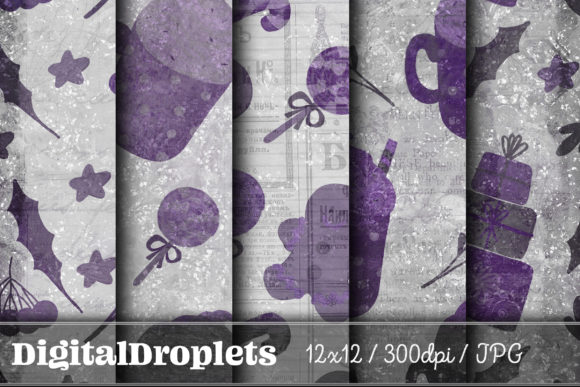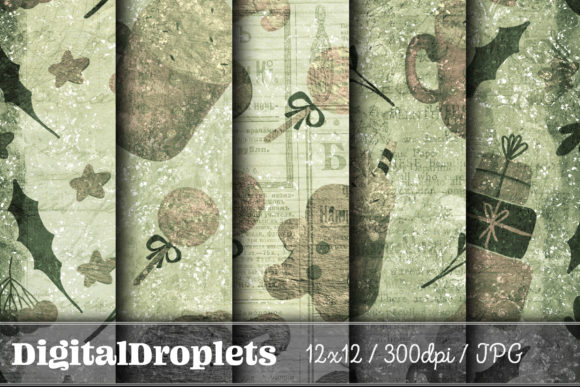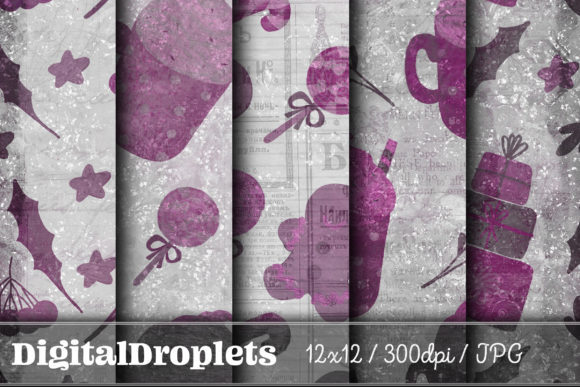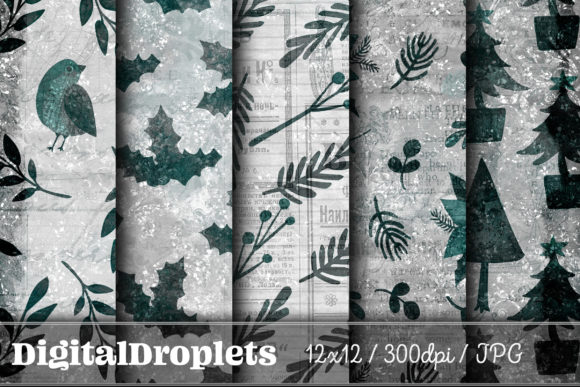
Christmas Home Vol. 28 | Vintage Paper Collection
There’s a particular kind of warmth that comes from holding something that feels like it has a story. A creased envelope, a yellowed recipe card, a letter written decades ago—these objects carry an emotional weight that brand-new, perfectly crisp materials simply can’t replicate. For designers and creators who want to channel that nostalgic, heartfelt feeling into their work, the Christmas Home Vol. 28 | Collection offers a thoughtfully curated set of digital papers designed to do exactly that.
What Makes These Papers Different
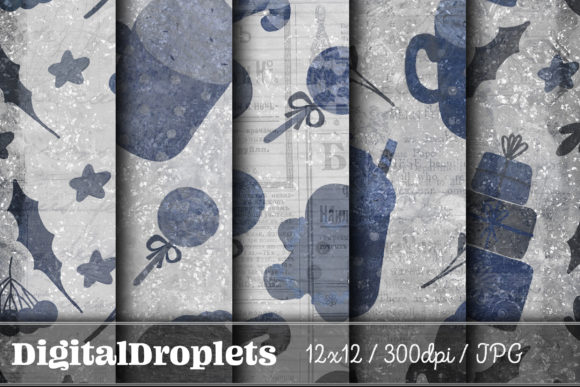
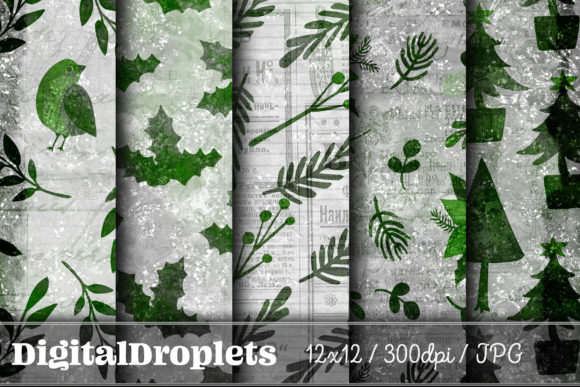
At first glance, this is a set of ten 12×12 digital papers with Christmas patterns. But look closer and you’ll notice something more intentional happening. Each page layers a distinct holiday motif—think traditional seasonal elements—over a vintage paper texture that already has visual history baked into it. Some of the papers feature faint handwriting, the kind you’d find on a grandmother’s shopping list or a child’s letter to Santa. Others blend a secondary, subtle pattern beneath the primary design, creating a depth that rewards a second look.
This layering approach is what separates the Christmas Home Vol. 28 | Collection from flat, single-note digital papers. The vintage textures aren’t just a background—they’re an active part of the composition. They add grain, imperfection, and a sense of age that modern, clean-edged designs often lack. If you’ve ever struggled to make a digital project feel tactile and real, these papers solve that problem at the source.
Where This Collection Shines
The versatility of these papers is genuinely broad, and that’s worth exploring in practical terms. For scrapbookers—whether you’re documenting family holiday memories or building a themed album for sale—these textures provide an instant foundation that feels authentic. No need to distress or overlay aging effects yourself. The work is already done, and done well.
Junk journal creators will find these especially useful. The handwritten elements and layered patterns mimic the look of found ephemera, which is the entire aesthetic point of junk journaling. Print a sheet, tear the edges, and it sits naturally alongside ticket stubs, pressed flowers, and vintage postcards.
For card makers and invitation designers, the Christmas Home Vol. 28 | Collection papers work beautifully as background layers. Because each sheet has its own distinct pattern and texture, you can select papers that complement rather than compete with your typography and focal imagery. A subtle, text-heavy vintage paper behind a bold serif font creates visual contrast that feels considered, not accidental.
Beyond traditional craft applications, these papers translate well into commercial design work. Blog headers, social media graphics, and website backgrounds all benefit from textures that break up the sterile uniformity of digital screens. If you run a small brand with a rustic, handmade, or heritage positioning, incorporating these papers into your visual identity—even as occasional accent elements—can reinforce that brand personality without requiring a full redesign.
Working With Vintage Textures in Modern Projects
One thing I’ve learned over years of working with textured design assets is that restraint matters. The Christmas Home Vol. 28 | Collection papers are visually rich. They have detail, pattern, and character. That means they work best when you give them room to breathe. Pair them with clean, simple layouts. Use generous white space—or in this case, let the vintage texture act as your white space. Overlay solid-colored shapes for text placement rather than trying to force copy directly onto a busy pattern.
Font pairing is another consideration worth thinking through. These papers have a handmade, historical quality. Pairing them with ultra-modern geometric sans serif fonts can create an interesting tension, but it needs to be deliberate. More naturally, they complement serif fonts with moderate contrast, warm script fonts, and handwritten typefaces. Think about the kind of lettering you’d actually see on vintage holiday cards and let that guide your choices.
Practical Details Worth Noting
The set includes ten high-resolution JPEG files at 300dpi in 12×12 format. That resolution is print-ready, which matters if you’re producing physical products like cards, tags, gift wrap, or planner stickers. At 300dpi, these papers will hold up cleanly at their native size and can be scaled down without any quality loss.
It’s worth mentioning that these ten papers are part of a larger twenty-paper set. The listing images show selections from the full collection, so what you receive will be a specific subset. If you’re working on a larger project and need more variety, the shop offers additional variations and even sample freebies so you can test the style before committing to a larger purchase. That kind of transparency is helpful, especially when you’re evaluating whether a design asset fits your workflow.
Real-World Applications That Actually Work
Let me ground this in specifics. Say you’re a small business owner creating holiday packaging inserts—thank-you cards, discount codes, product care instructions. Printing these on a vintage-textured paper background immediately elevates the unboxing experience. It signals care and intention, which translates directly into customer perception of your brand.
Or maybe you’re a content creator building a Christmas-themed Pinterest board or Instagram grid. Using these papers as quote backgrounds, story templates, or carousel slide bases gives your feed a cohesive, curated look that stands apart from the typical red-and-green clip art approach.
For publishers and editorial designers working on seasonal content—a holiday magazine feature, a Christmas recipe booklet, a community newsletter—these papers provide section dividers, pull-quote backgrounds, and decorative borders that feel organic rather than stock-generated.
The Christmas Home Vol. 28 | Collection isn’t trying to be everything. It’s a focused set of vintage-inspired Christmas papers with real texture and genuine character. Used thoughtfully, they add a layer of warmth and authenticity to digital and print projects that’s difficult to achieve with cleaner, more conventional design assets.